Personal Essays · 22 Jul 2026
Peller, the ‘Olodo Uprising’ and the Intelligence We Choose to Respect
The recent argument around Peller and Ycee’s “Olodo uprising” comment has mostly been treated as a fight between education and internet culture.

The argument around Peller says as much about our ideas of status, education and success as it does about him.
The recent argument around Peller and Ycee’s “Olodo uprising” comment has mostly been treated as a fight between education and internet culture. Ycee’s concern was that Nigerian society increasingly rewards ignorance, outrageous behaviour and viral fame while academic excellence loses value. He used “Peller culture” as an example. He later explained that he was describing a wider culture rather than simply calling one person unintelligent.
What interested me was the assumption underneath the argument. People were not only asking if Peller’s content is foolish. They were asking how someone they consider an olodo could have this much money, influence and access. They were asking if he deserved a seat at the table.
That leaves us with two different questions. Is Peller really an olodo? And even if he were, why would that make him less deserving of basic respect or success?
| People reject social ranking when the chosen measure puts them below someone else. They become more comfortable with it when the measure favours them. |
Everyone chooses the hierarchy that favours them

We like to say money should not determine a person’s worth. A wealthy person is not automatically better than someone with less. Respect should not disappear because one person has a larger bank account. Most educated people would agree with that.
Some of those same people will hear someone speak poor English, behave childishly or reveal that they do not have impressive qualifications and immediately place that person below themselves. Money is rejected as a measure of human value. Perceived intelligence is treated as a respectable replacement.
I am not arguing that wealth should become the correct way to rank human beings. I brought up wealth because it exposes the hypocrisy. Wealth is at least easier to verify. Intelligence is harder to measure and it has several forms. Yet people make confident judgments about another person’s intelligence from a few clips, an accent, grammar or the kind of content they produce.
Most of us want society to respect the quality we believe we have. Wealthy people want their success recognised. Educated people want qualifications and intellectual ability recognised. Attractive people may place more value on appearance. Popular people will tell you influence matters. The problem is rarely hierarchy itself. The disagreement is usually about which currency should determine the ranking.
Peller has played the same game from the other side. In 2025, he livestreamed interviews for a ₦500,000 cameraman or content role attended by people who said they had master’s degrees and other professional qualifications. Many viewers felt the exercise humiliated educated job seekers. That criticism is fair. He used wealth, employment and internet power to reverse the hierarchy and dunk on people whose certificates were supposed to place them above him.
The graduates’ defenders used education to look down on Peller. Peller used money and status to look down on graduates. Neither side was defending equality. They were fighting over which type of superiority should count.
Intelligence has a costume

There is a particular way an intelligent person is expected to look in Nigeria. The person should speak polished English, have academic qualifications, behave seriously and sound composed in public. Peller performs almost the exact opposite. He is loud, childish, grammatically rough and unpredictable. Sometimes he appears deliberately ignorant.
Because he does not fit the accepted image of intelligence, people assume there cannot be an intelligent process behind his success. They confuse the performance with the performer and the content with the mind producing it.
His content can look like the work of an olodo. Some of his behaviour deserves that description too. That still does not prove that the person who built and sustains the operation lacks intelligence.
Intelligence is not one neat quality that appears mainly in classrooms or formal conversations. A person can be poor at expressing abstract ideas and still be exceptional at reading people, solving practical problems, recognising patterns or making decisions inside a specialised field. We accept this easily in some professions and refuse to accept it in others.
Nobody asks Messi to defend his intelligence in a seminar
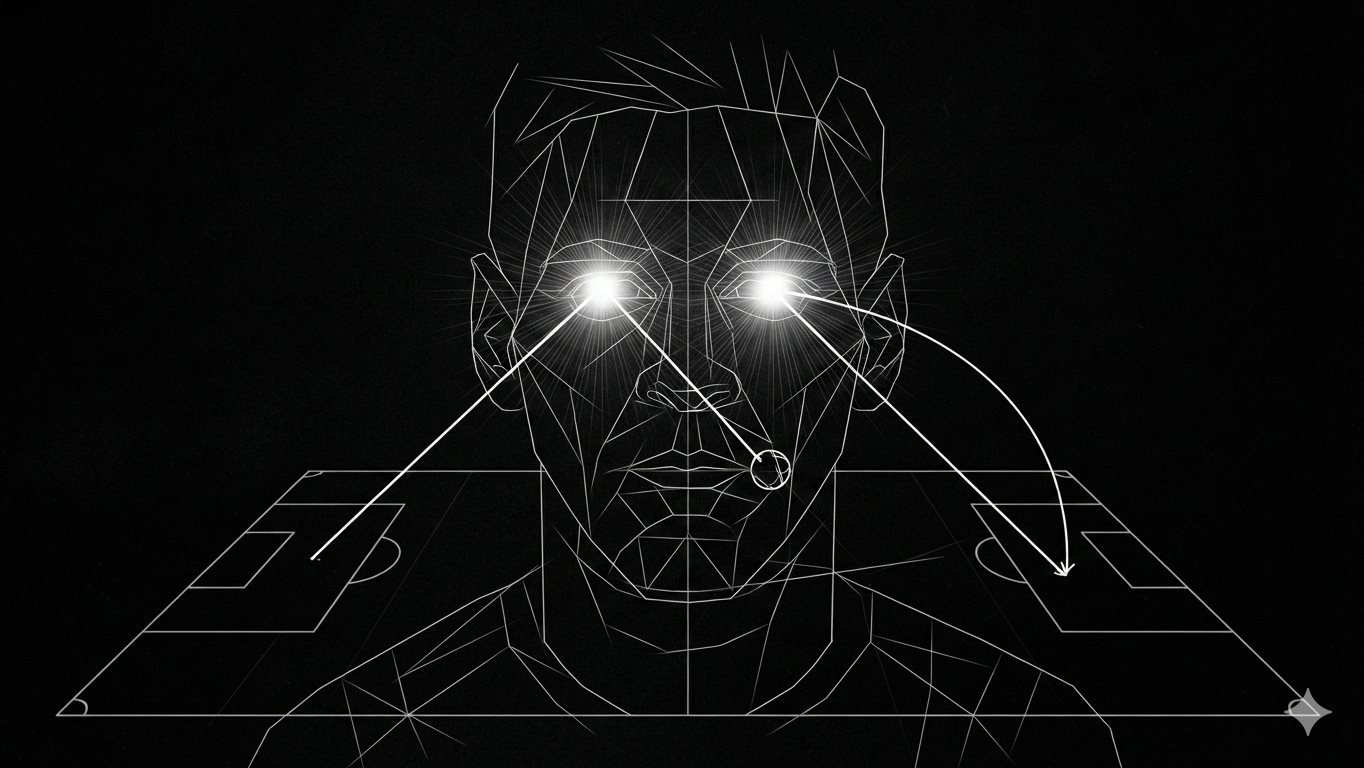
Lionel Messi is widely recognised as a football genius. We do not reach that conclusion because of how he speaks in interviews. We watch his spatial awareness, timing, movement, decision-making and execution. He processes the pitch faster than almost everyone around him and repeatedly turns those decisions into results.
That is intelligence expressed through football.
A successful livestreamer works in a different field but the principle is similar. The work requires an understanding of attention, pacing, comic timing, audience psychology, collaborations and repeat viewing. A streamer has to know when a moment is dying, when to push a joke, when to react, when to create tension and how to turn an ordinary interaction into a clip people will share.
Peller does this live for long periods. There is little room for retakes. He has to stay recognisable without becoming completely predictable. He has to keep viewers watching while thousands of other creators compete for the same attention. The audience sees chaos. Behind the chaos is a series of decisions.
As someone who has studied creators across different markets and worked behind the scenes of social media growth, I would be betraying what I know if I reduced sustained performance at that level to stupidity or luck. You can dislike the result. You can dislike the person. You still have to understand the work.
| Virality can happen by accident. Retention rarely does. |
Luck can start a career. It cannot carry the whole thing

People often explain a creator’s success by saying the person was lucky. Luck certainly exists online. Timing matters. Algorithms matter. A collaboration can introduce someone to an audience at the right moment. A random clip can travel further than anyone expected.
Luck may explain the first viral video. It does not fully explain years of relevance.
Think of luck as nitro in a car race. The boost can push a car ahead for a few seconds. It cannot replace the engine. A weak car may jump in front at the beginning and fall behind for the rest of the race. By the time the nitro recharges, the cars with stronger engines may be too far ahead to catch.
Consistency is the engine. So are observation, experimentation, discipline and the ability to understand what an audience is responding to. Every creator gets lucky at different points. The creators who last usually know how to turn that luck into a system.
Thousands of people have attempted versions of what Peller does. Some have more money, better equipment, stronger connections and cleaner English. Most will never reach his level. There are also creators who went viral once three years ago and have spent every month since trying to recreate the same numbers. That is what luck looks like. One unexplained spike followed by an inability to repeat it.
Sustained growth is different. It does not mean every decision is brilliant. It means the person understands enough of the craft to keep producing outcomes in an environment where most people fail.
The Mr Bean problem
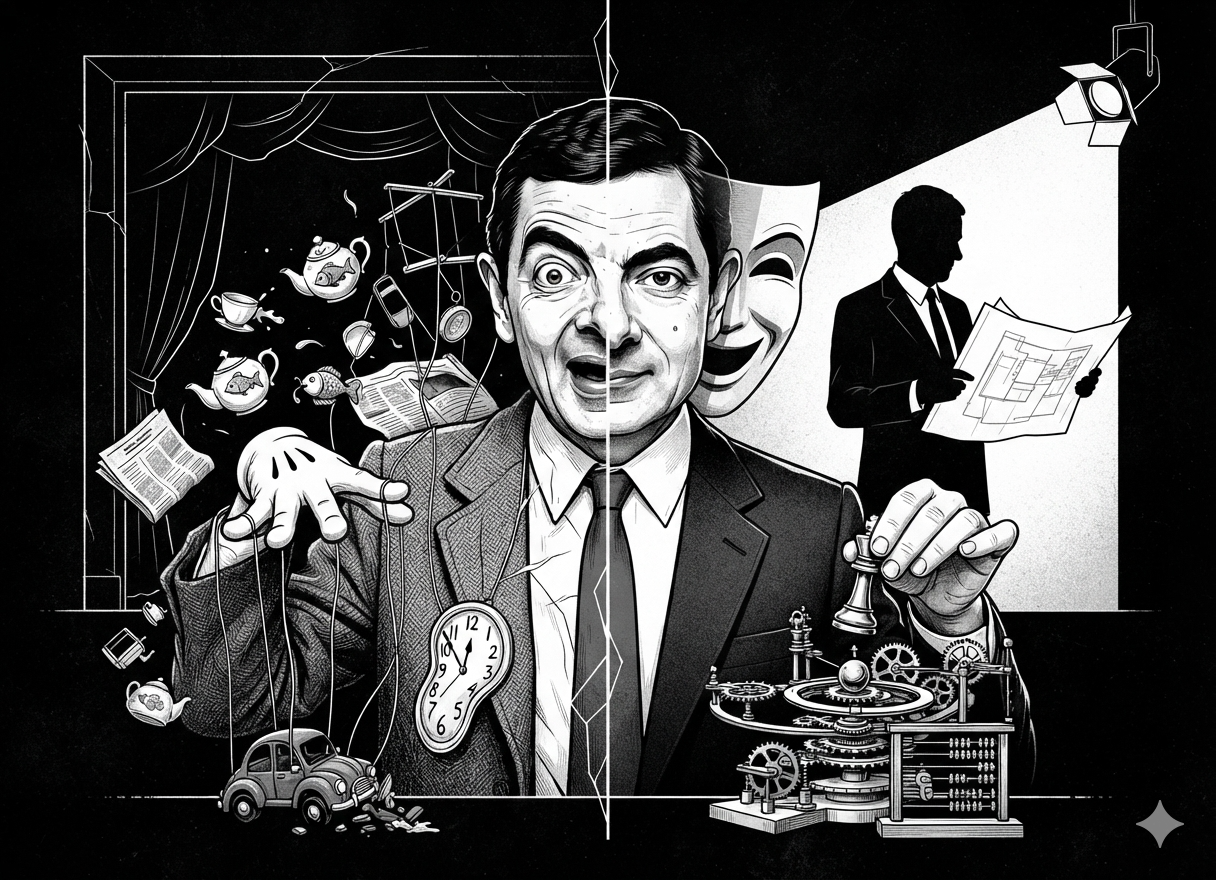
Rowan Atkinson spent years playing a man who looked foolish, behaved strangely and barely spoke. As children, many of us knew Mr Bean mainly as the stupid funny man on television. We still understood that Rowan Atkinson himself was an actor performing a character. The separation was obvious because the character existed inside a scripted programme.
Imagine Mr Bean as a modern streamer. He would have to remain in character for hours. There would be no script protecting every scene, no editor removing the weak moments and no clean boundary between the performance and daily life. Viewers would see so much of the character that they might begin to believe the character was the complete person.
Peller is not a direct copy of Mr Bean and I am not claiming every strange thing he does is carefully scripted. His public persona may be an exaggerated version of his real personality. That makes the line harder to draw. It does not mean there is no performance involved.
Creators learn which parts of themselves attract attention. They exaggerate those parts because the audience rewards them. Over time, the persona becomes part of the product and sometimes part of the person. Acting foolish can be commercially intelligent even when the content itself remains foolish.
Respecting the skill does not excuse the behaviour
This argument is not a defence of everything Peller does. His treatment of educated job seekers can be criticised. His content can encourage the idea that education has no value. His public conduct can be childish, disrespectful or harmful. A person can understand attention and still use that knowledge badly.
Competence and character are separate judgments.
The strongest criticism of Peller is that a skilled creator may be using that skill to reward behaviour that leaves the culture worse. That is a serious argument. Calling him unintelligent is a weaker one because it avoids analysing how the content works and why people keep watching.
Disliking a product does not erase the skill required to build it. I may dislike the content of Nigeria’s most successful OnlyFans creator. I can still recognise the work involved in understanding an audience, building distribution and sustaining a business in a crowded market. Respect for competence is not moral approval.
The same distinction applies to a seat at the table. Which table? Peller’s success does not make him an authority on education policy, medicine or every national issue. It does earn him a place in serious conversations about streaming, audience behaviour, digital entertainment and the creator economy. A master’s degree does not automatically make someone more knowledgeable than him in those areas.
What Peller’s success forces people to confront
Peller makes some educated people uncomfortable because he has achieved rewards they were taught should follow intelligence, good behaviour and formal qualifications. He has money, access and cultural influence without displaying the symbols they associate with deserving those things.
His success breaks the social order they expected. The educated person was supposed to sit above the olodo. The graduate was supposed to employ the person with poor English. The respectable person was supposed to receive more attention than the unserious one. Peller’s career turns that expectation upside down.
That does not make the new order fair. It reveals that the old one was never as morally clean as people imagined.
I will always respect people who can take a project from zero and build it into something substantial. Building does not make every decision correct and it does not make every product good. It does show a level of ability that people who only live inside their ideas often underestimate.
Peller may perform foolishness. His content may deserve criticism. His character may be irritating. None of those observations is enough to make him an olodo.
The deeper intellectual failure is refusing to recognise intelligence because it speaks differently, behaves differently or appears in a field we do not respect.
Sources for factual context
• Channels Television, “Ycee Sparks Debate Over ‘Olodo Uprising’ Comment,” 26 June 2026.
• TheCable Lifestyle, “Ycee addresses controversy over ‘olodo uprising’ comment,” 1 July 2026.
• The Guardian Nigeria, “Mixed reactions as Peller interviews master’s degree holders for ₦500k cameraman job,” 12 July 2025.
• Punch, “Ycee-Peller feud sparks fresh debate over Nigeria’s education crisis,” 27 June 2026.
Editorial note:This is a personal argument, not a neutral profile of Peller. The sources above support the factual context. The judgments and comparisons are the author’s own.