How to read these. Each file follows how I think: the brief, what I noticed, the calls I made and why, how it would run, and what I recommended. Screenshots come from the documents I handed over.
01 A managed IT firm in Kansas City Content strategy to book IT assessments 02 A medical compression brand 30-day TikTok creator launch 03 A UK job platform for students Pre-launch plan and waitlist push 04 A SaaS for auto recyclers Beta community plan before launch 05 A breathwork author and teacher Creator partnership program File 01 · Content and community strategy A managed IT firm in Kansas City Content strategy to book IT assessments
When Aug 2025 Platforms LinkedIn, Facebook, Instagram, X/Twitter Delivered The strategy, as a written plan The brief What I noticed The calls I made How it would run What I recommended Ideas From the document The brief
Their Facebook ran on autopilot. They wanted social to bring in booked IT assessments from businesses within 50 miles.
What I noticed
Before writing a single post The buyer is not an IT person Owners, office managers and the staffer who became "IT by default". They want fewer outages and plain English.
Proof beats promises They value reliability over buzzwords and respond to proof more than claims.
Each platform has a different job LinkedIn for business, Facebook for local credibility, Instagram for culture, X/Twitter for quick alerts.
Facebook ran on automation The page kept posting, but nothing on it was human or local.
The insight the plan stands on Be the helpful name local businesses recognize when something breaks, so booking an assessment feels safe. Every post had to teach, prove or start a conversation.
The calls I made
Each decision, and the reason for it Keep the automated Facebook feed and add human, local posts on top.
The automation already kept the page active. What it lacked was a local, human voice.
Give each platform one job: LinkedIn for leads, Facebook for local proof, Instagram for visual proof, X/Twitter for security alerts.
The audience already uses each one for a different reason.
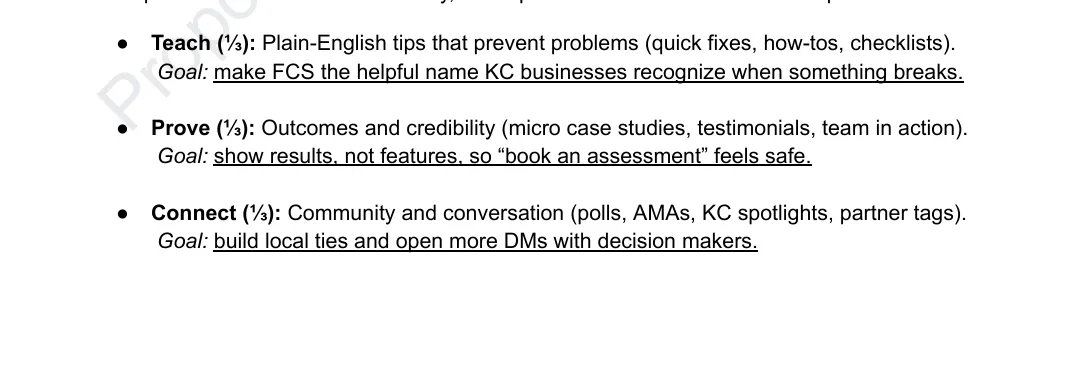
Split every week three ways: teach, prove, connect.
Every seven days people see something useful, something reassuring and something that invites a reply.
One call to action everywhere: book a no-obligation assessment.
One action is easy to say, easy to track and easy to say yes to.
Plan video for a team that may not want to be on camera: hands-only demos and screen recordings as a fallback.
A plan only works if the team can actually make it every week.
How it would run
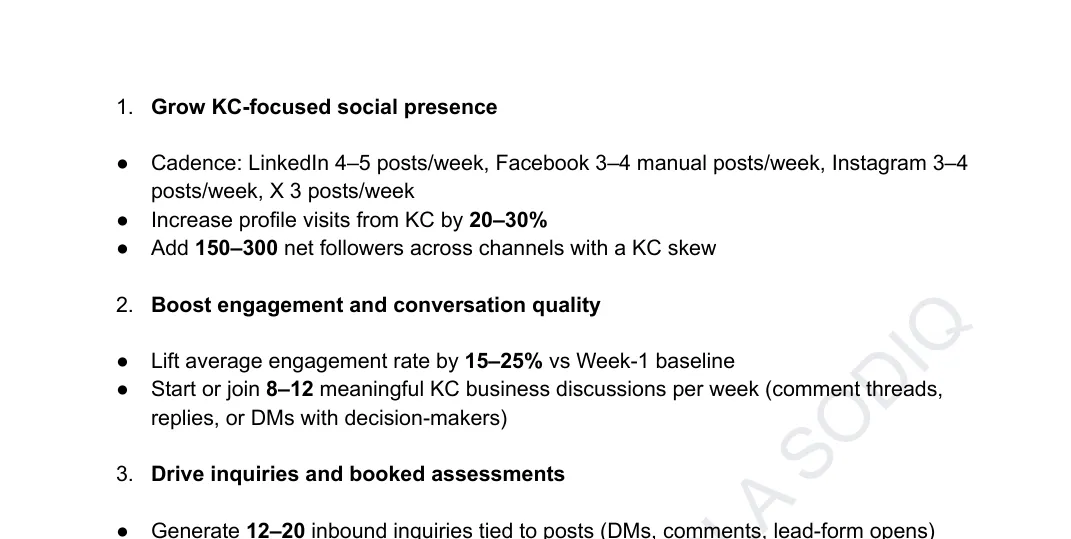
4-5 LinkedIn posts a week
3-4 human Facebook posts a week
4-6 booked assessments targeted by week 4
1 day reply time on every comment and DM
What I recommended
Set a baseline in week 1 before chasing targets. Never show client names, emails or dashboards in videos. Blur screens and use dummy data. Hold the competitor audit and community map until kickoff, so they are built on their real competitors and groups. Ideas from the plan
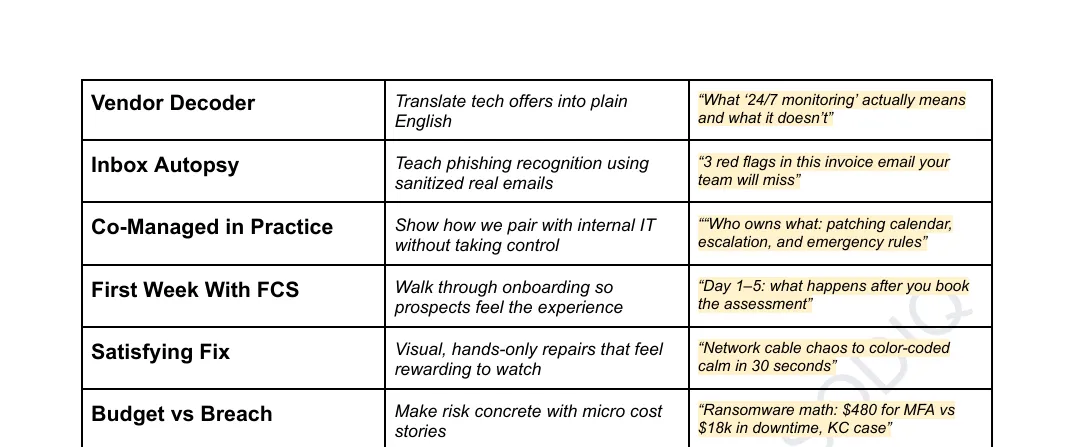
Budget vs Breach Ransomware math: $480 for MFA vs $18k in downtime
Two-Path Demo Password reset storm: 27 minutes DIY vs 6 with the help desk
Satisfying Fix Network cable chaos to color-coded calm in 30 seconds
Vendor Decoder What '24/7 monitoring' actually means, and what it doesn't
Inbox Autopsy 3 red flags in this invoice email your team will miss
First Week With Us Day 1 to 5: what happens after you book the assessment
From the document
30-day goals: a week-1 baseline, then targets by week 4
The teach, prove, connect split
Part of the 12 video formats, each with a sample File 01 of 05 Next file: A medical compression brand →
File 02 · Medical creator strategy A medical compression brand 30-day TikTok creator launch
When Jun 2026 Platforms TikTok, Instagram, Facebook Delivered The strategy, as a written plan The brief What I noticed The calls I made How it would run What I recommended Ideas From the document The brief
Find credible clinical voices for clinical-grade compression wear and launch on TikTok, with TikTok Shop built in.
What I noticed
Before writing a single post The market talks to the wrong patient Most compression marketing assumes older varicose-vein patients.
The real communities are elsewhere Lipedema, lymphedema, POTS and EDS patients trade recommendations in Facebook groups and on TikTok.
Trust comes from credentials In medical niches, a therapist with a CLT means more than a big follower count.
The pool is small Few creators fit, so drop-off has to be replaced every week.
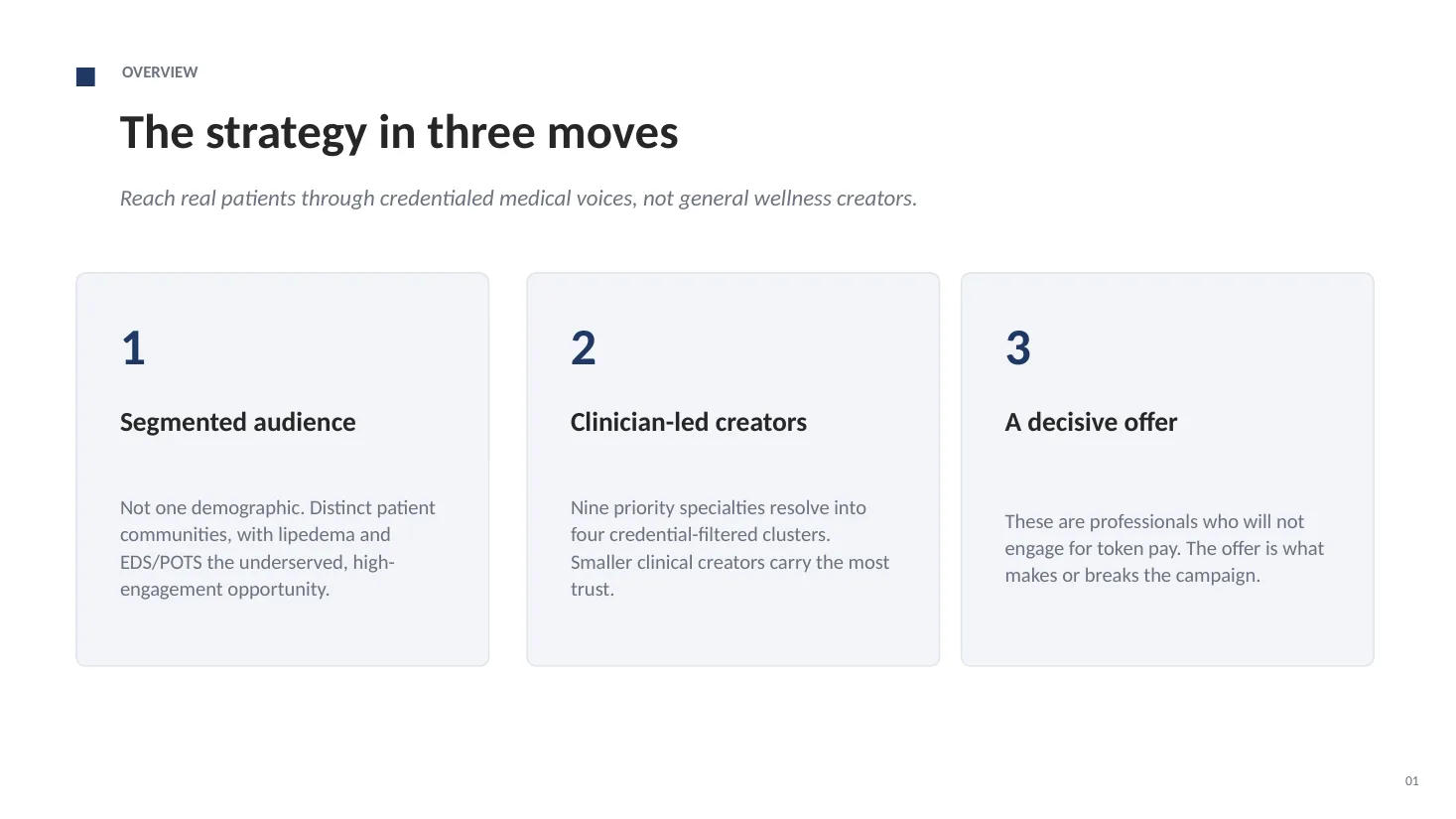
The insight the plan stands on The real opening is lipedema and EDS/POTS, reached through people with clinical credentials.
The calls I made
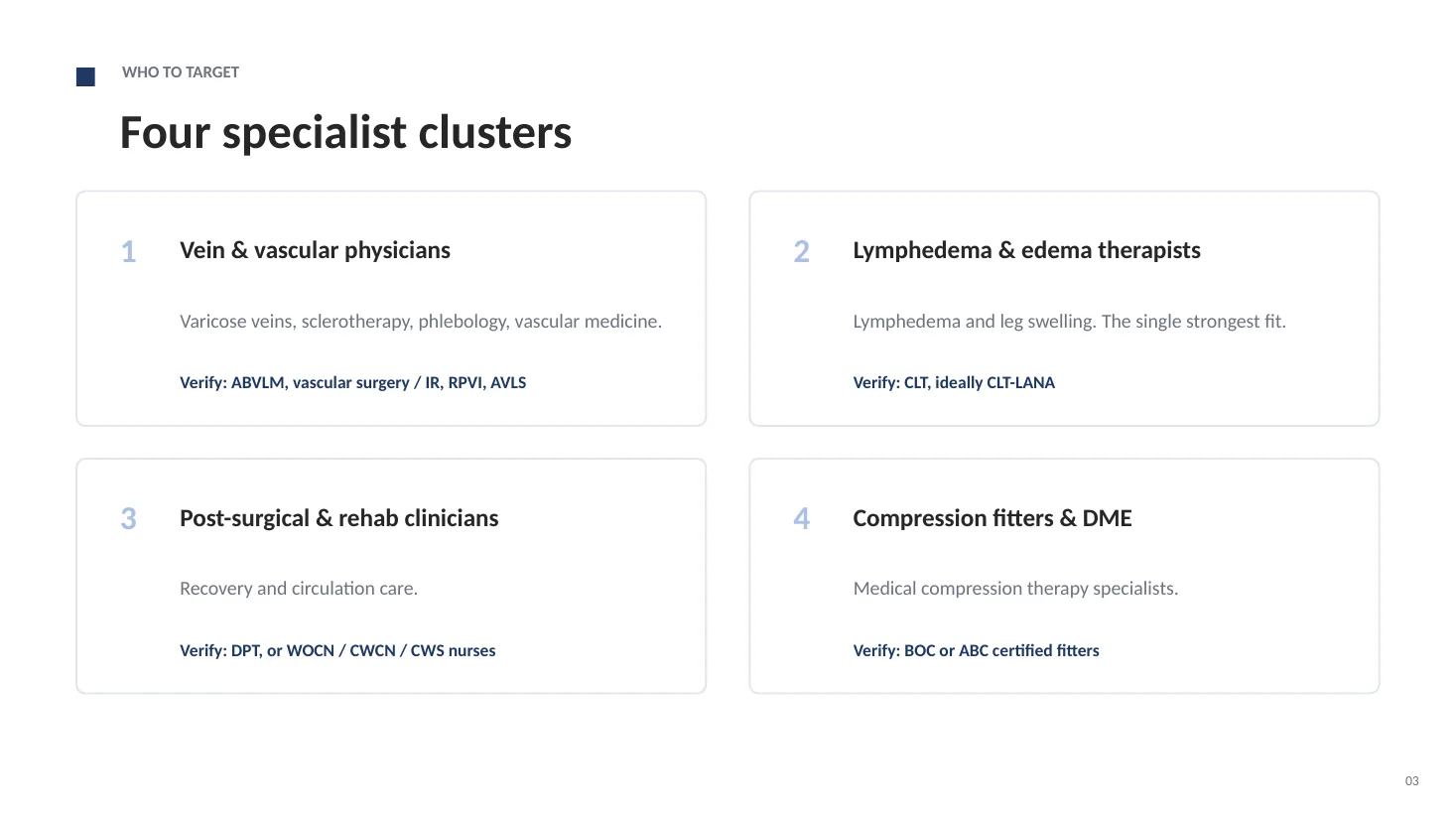
Each decision, and the reason for it Group creators into 4 clusters, each with a credential to verify before outreach.
Medical claims need voices that can stand behind them.
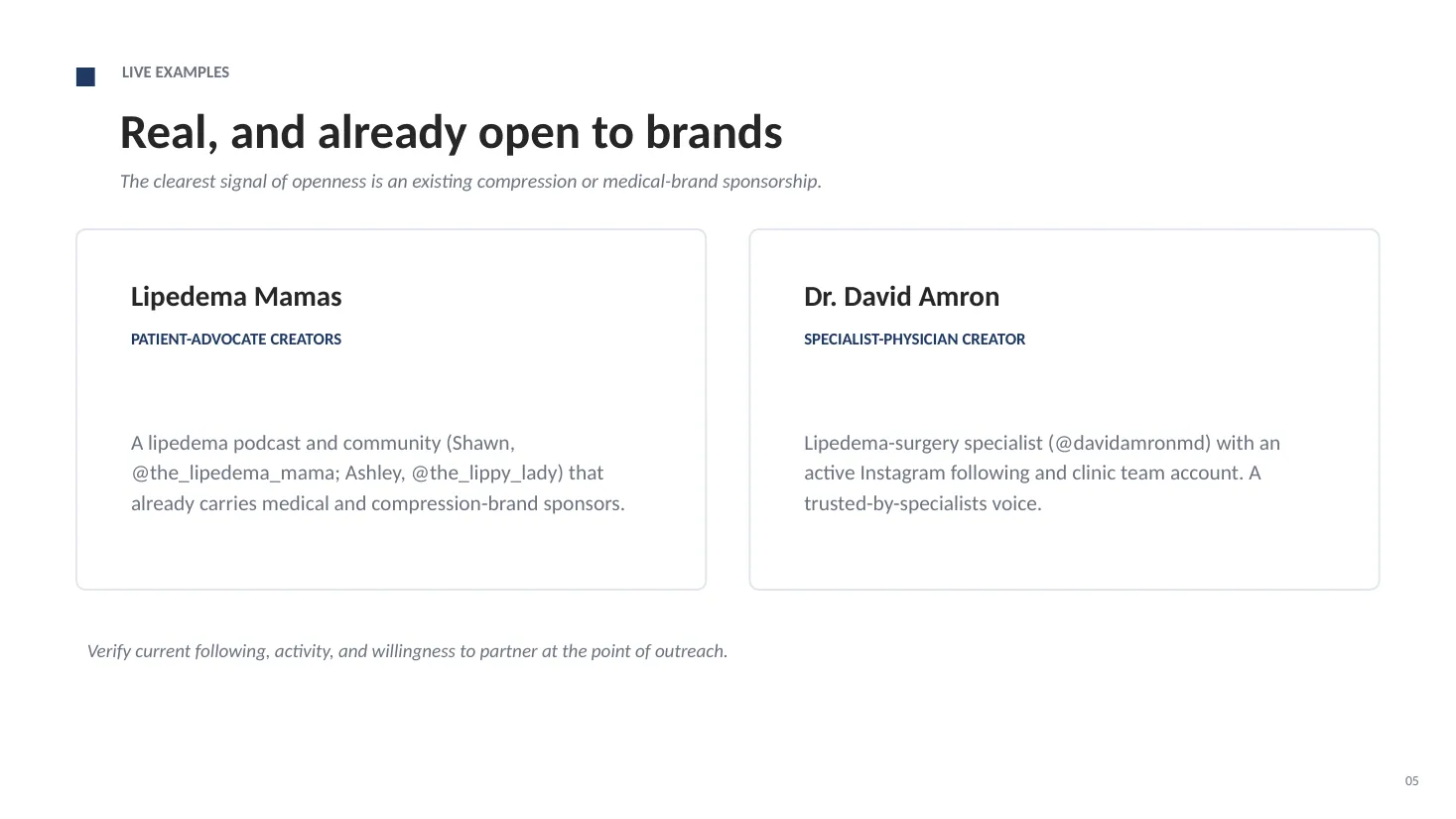
Start with lymphedema therapists and patient advocates.
Compression is their daily practice, so a code reads as a clinical recommendation, not an ad.
Offer by creator type. Physicians get product for an honest review, not affiliate deals.
Their value to the brand is credibility, not sales volume.
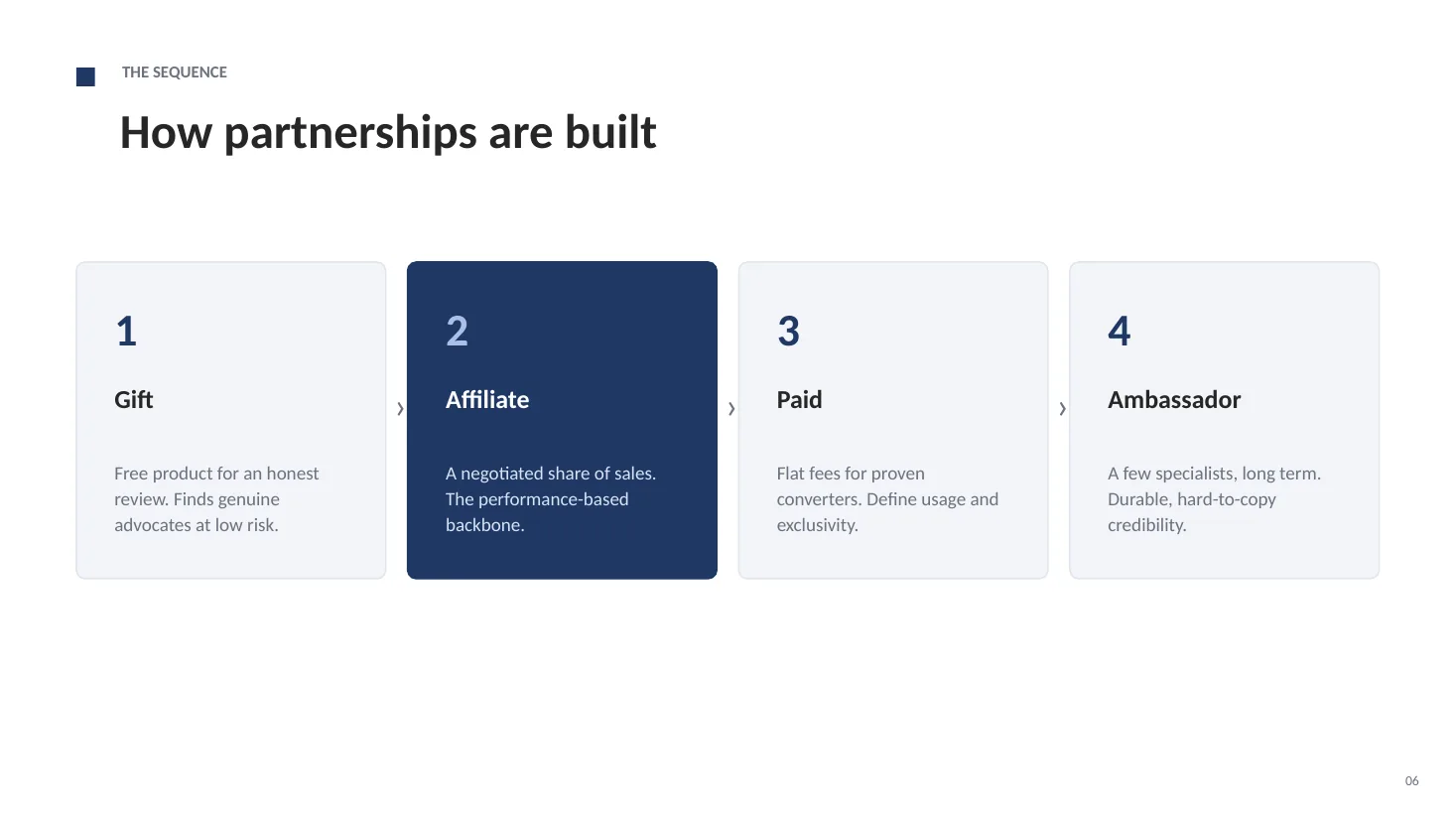
Build partnerships in order: gift, affiliate, paid, then ambassador. No upfront payments in month 1.
Pay only after the data shows who converts.
Set conservative targets.
With a small pool, hitting real numbers matters more than big projections.
How it would run
30-35 creators vetted
20-25 creators contacted
3-5 gifting agreements by day 30
3 tracking layers: Shop, codes, UTMs
The offer, by tier
Tier Offer When it applies Low Gifting only: free product for an honest review Default for month 1. Most patient advocates and many therapists accept it. Medium Gifting plus 15-20% TikTok Shop commission Creators who want ongoing upside. The backbone of the program. High Gifting plus 20-25% commission plus a flat fee Proven converters only, with client sign-off.
$25-500 per post, nano creators (1K-10K). Many accept product alone.
$500-5,000 per post, micro creators (10K-100K)
10-25% lower on TikTok than Instagram at these tiers
8-12% engagement for small creators, vs 1-2% for mega accounts
What I recommended
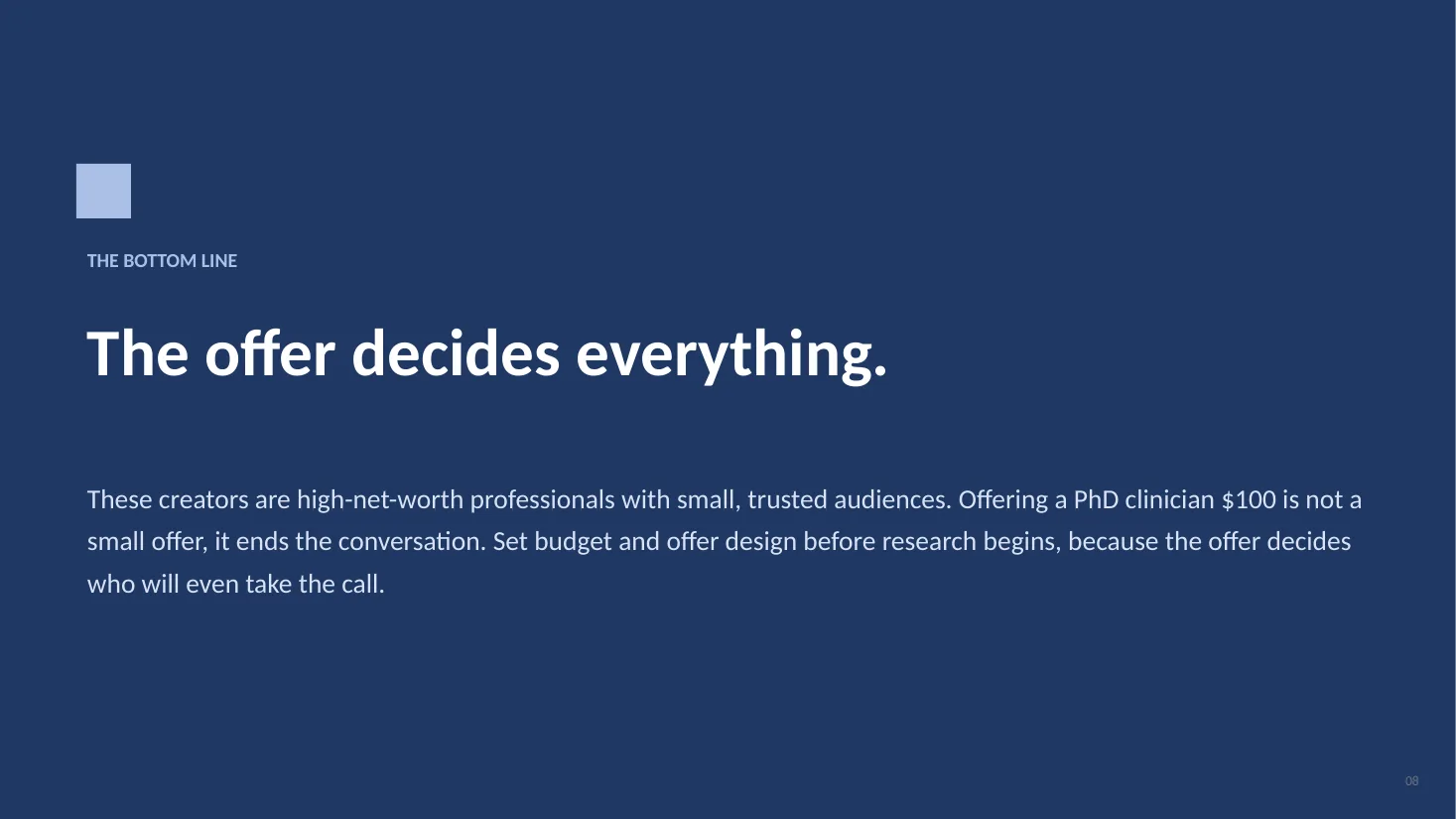
Set the budget and offer tiers before research starts. The offer decides who takes the call. Keep claims to what compression is documented to do. No cure claims. Judge sales at 60 to 90 days, once content has had time to compound. Ideas from the plan
Clinician demo Donning demos, swelling management and how to pick a garment
Honest review A gifted TikTok review with clear disclosure, tagged in TikTok Shop
Recovery guidance Procedure education and recovery tips from a vein-clinic voice
From the document
The strategy in three moves
Four specialist clusters, each with a credential check
Real creators already open to brand deals
How partnerships are built
The bottom line of the deck File 02 of 05 Next file: A UK job platform for students →
File 03 · Pre-launch social strategy A UK job platform for students Pre-launch plan and waitlist push
When Dec 2025 Platforms LinkedIn, Instagram, TikTok Delivered The strategy, as a written plan The brief What I noticed The calls I made How it would run What I recommended Ideas From the document The brief
A new job platform for finance and tech students, starting from zero, needed trust, a community and waitlist sign-ups before launch.
What I noticed
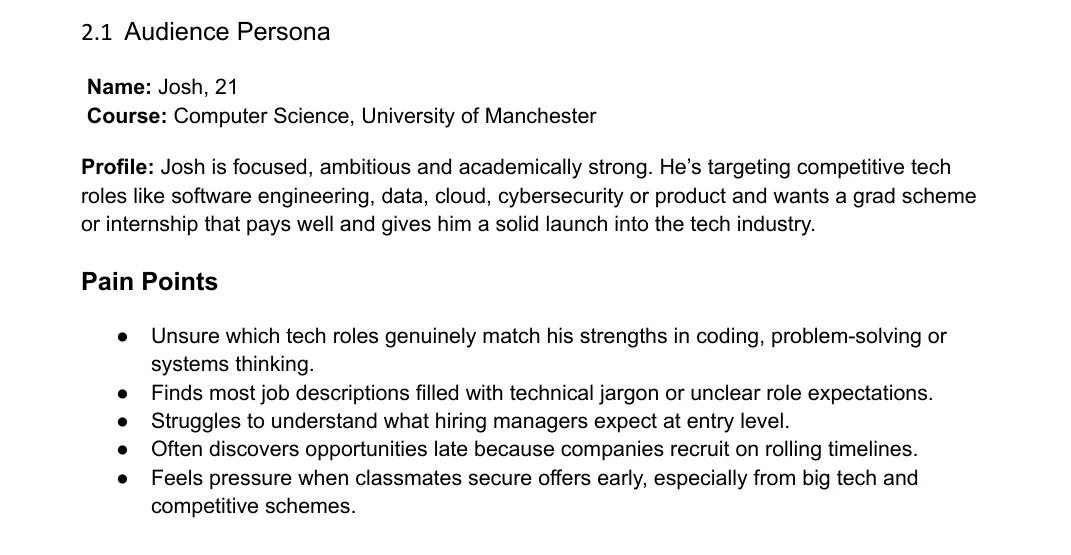
Before writing a single post Josh, 21, studies computer science He finds roles late because companies hire on rolling timelines.
He uses LinkedIn to research, not to socialise He saves checklists and breakdowns he can use right away.
He shares in private Useful posts go to course mates in DMs more than in public comments.
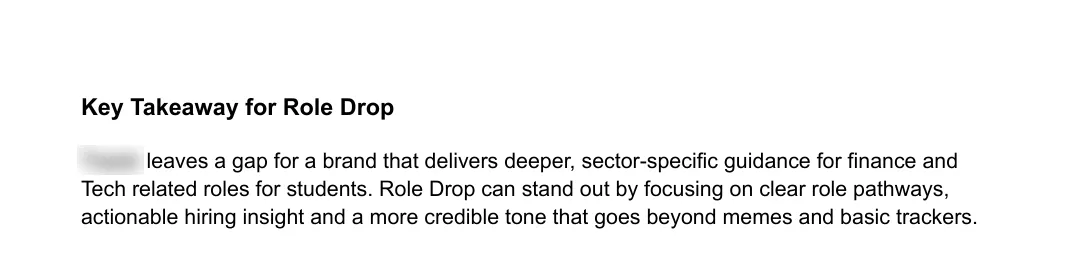
The best-known rival leans on memes Good reach, but the guidance stays surface-level and LinkedIn gets 2 to 3 posts a month.
The insight the plan stands on The gap was depth. Be the credible, sector-specific voice the meme accounts are not.
The calls I made
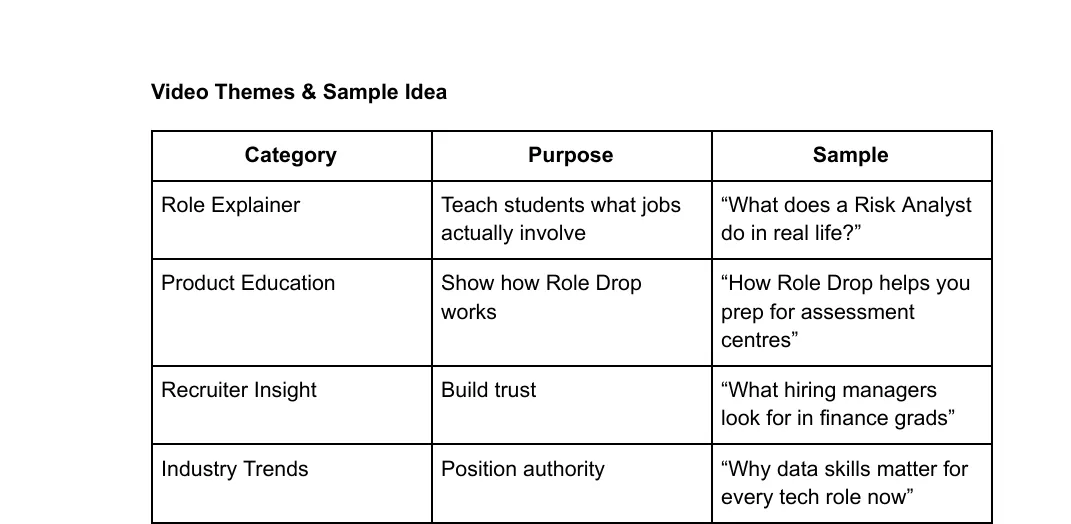
Each decision, and the reason for it Go deeper, not funnier: role breakdowns, hiring steps and myth-busting for finance and tech.
That is the gap the competition leaves open.
Open with the pain students feel most: finding roles too late.
A launch post should name the problem in one glance.
1 TikTok a week, 3 designed posts and 1 reel on LinkedIn and Instagram.
Video grows with the team's capacity to film, not before.
Build the week around the in-house designer: calendar, design, review, schedule, track.
The plan has to fit how the team already works.
Spend 1 to 2 hours a week in student conversations about assessment centres and grad schemes.
A brand with no audience has to go where the audience already is.
How it would run
9 posts planned for week 1
6 step designer workflow
Weekly snapshot in Slack
Monthly performance report
What I recommended
One link hub across every profile, with pinned guides and CV tips. Write every post with a reason it should work, so the team learns what to repeat. Review reach, saves, watch time and link clicks every week, and let them shape the next calendar. Ideas from the plan
Hook The line you should remove from your CV today
Myth Applying late is fine. The truth: most roles use rolling deadlines.
Video Do you need a perfect GPA? Here's the truth.
From the document
The persona the plan was built around
The key takeaway from the competitor teardown (competitor name blurred)
Video themes with sample ideas File 03 of 05 Next file: A SaaS for auto recyclers →
File 04 · Content and community strategy A SaaS for auto recyclers Beta community plan before launch
When Jul 2025 Platforms Facebook, LinkedIn, private group Delivered The strategy, as a written plan The brief What I noticed The calls I made How it would run What I recommended Ideas From the document The brief
An all-in-one tool for auto recyclers and salvage yards, in closed beta, needed trust and early adoption before public launch.
What I noticed
Before writing a single post Carlos the Yard Boss, 38 He runs orders from his own phone and juggles 5+ disconnected tools.
Peers beat ads Recyclers trust word of mouth and ask each other for advice on Facebook.
Tech-cautious, not tech-averse He wants tools that just work, and to have a say in how they are built.
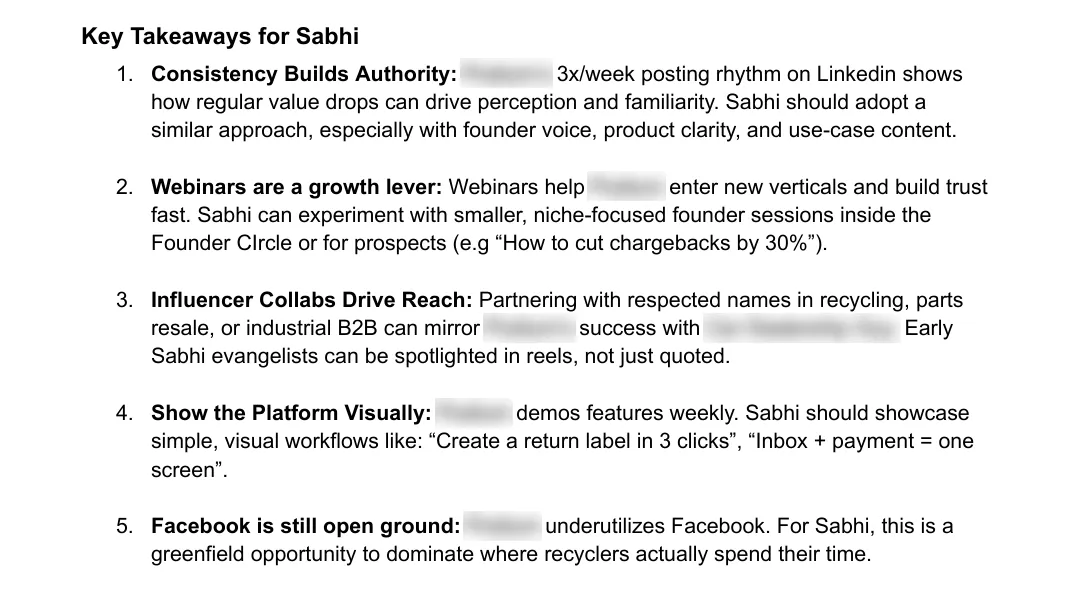
Facebook was empty The biggest competitor posted 8 times on Facebook all year.
The insight the plan stands on Facebook was open ground, and beta users wanted ownership. So the community became the marketing.
The calls I made
Each decision, and the reason for it Lead on Facebook, with LinkedIn for credibility.
That is where recyclers already talk shop, and where the competitor is absent.
Turn beta users into a Founders Circle: a badge, early access and votes on features.
People who feel heard become the ones who recommend you.
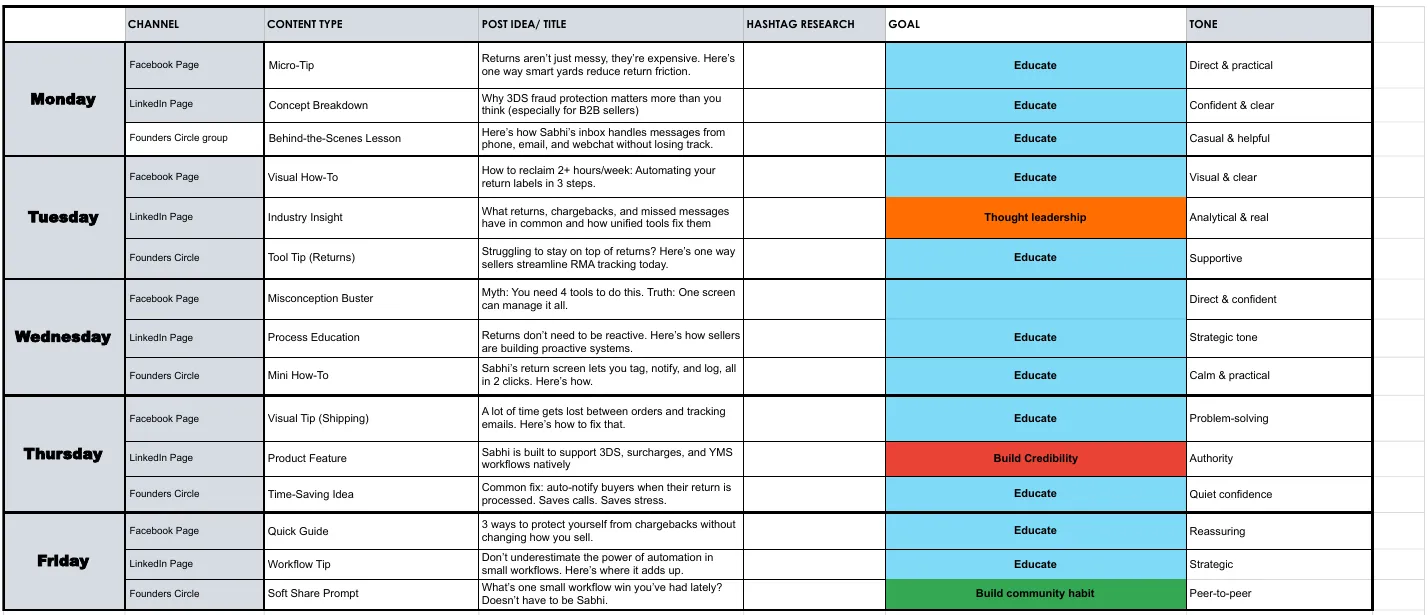
Show workflows, not features: a return label in 3 clicks, inbox and payment on one screen.
A cautious buyer needs to see it is simple.
Make giving back a pillar, with users voting on trade school, safety and cleanup projects.
It ties the brand to the community it serves.
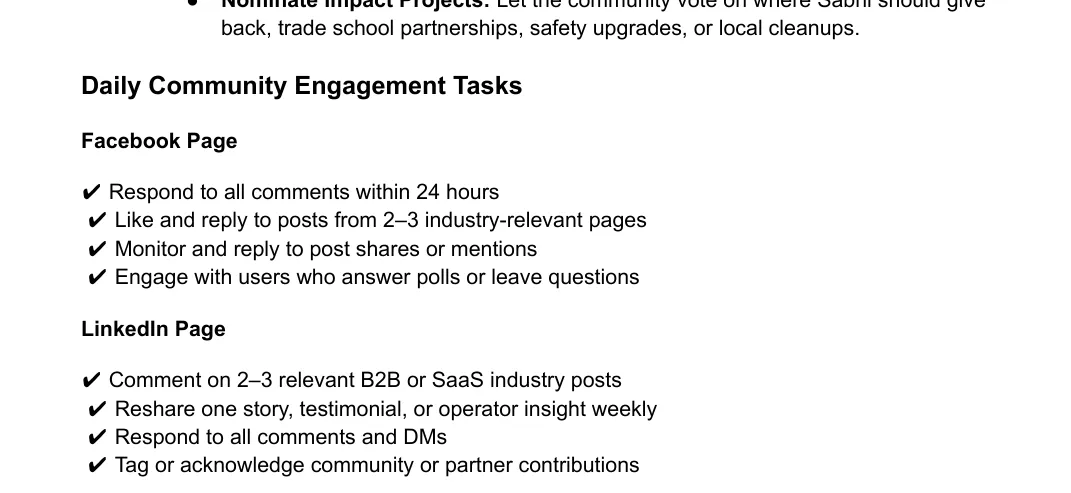
Treat every group post like a support ticket.
Fast replies are what make a beta group feel worth joining.
How it would run
5-6 posts a week in the group
3-4 Facebook posts a week
24 hrs max reply time
3 user insights a month for the product team
What I recommended
Run small founder sessions on one problem at a time, like cutting chargebacks. Spotlight early users in videos, not only in quotes. Report weekly with a simple green, yellow or red read on group sentiment. Ideas from the plan
Myth buster Myth: you need 4 tools to do this. Truth: one screen can manage it all.
Poll What's the most frustrating part of handling returns?
Soft prompt What's one small workflow win you've had lately? Doesn't have to be ours.
From the document
Takeaways from the competitor analysis (competitor names blurred)
Week 1: three channels, each post with its own tone
The daily engagement routine File 04 of 05 Next file: A breathwork author and teacher →
File 05 · Creator partnership strategy A breathwork author and teacher Creator partnership program
When Aug to Sep 2025 Platforms Instagram, TikTok, YouTube Shorts, podcasts Delivered The strategy, as a written plan The brief What I noticed The calls I made How it would run What I recommended Ideas From the document The brief
Grow sales of a free book offer, a membership and breathwork courses through long-term creator partnerships.
What I noticed
Before writing a single post A warm network already existed He had been a guest on 170+ podcasts.
One audience, three mindsets Athletes, wellness creators and spiritual guides each care about different things.
Wellness creators prefer a personal approach A message from the author lands better than a brand pitch.
Small creators fit best Values and story matter more here than reach.
The insight the plan stands on Start with people who already know him, then speak to each niche in its own language.
The calls I made
Each decision, and the reason for it Reach out to past podcast hosts first.
They already know him, so the first yes comes faster.
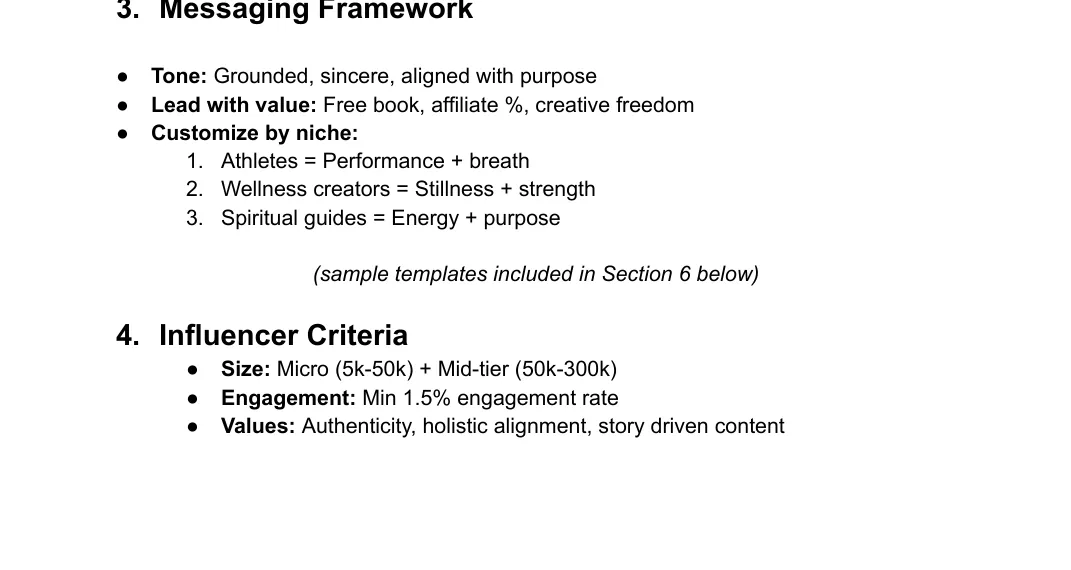
One message per niche: athletes hear performance and breath, wellness hears stillness and strength, spiritual hears energy and purpose.
The same book means something different to each group.
Lead with value: a free book, a 20-40% affiliate share and creative freedom.
Creators say yes to what respects their voice.
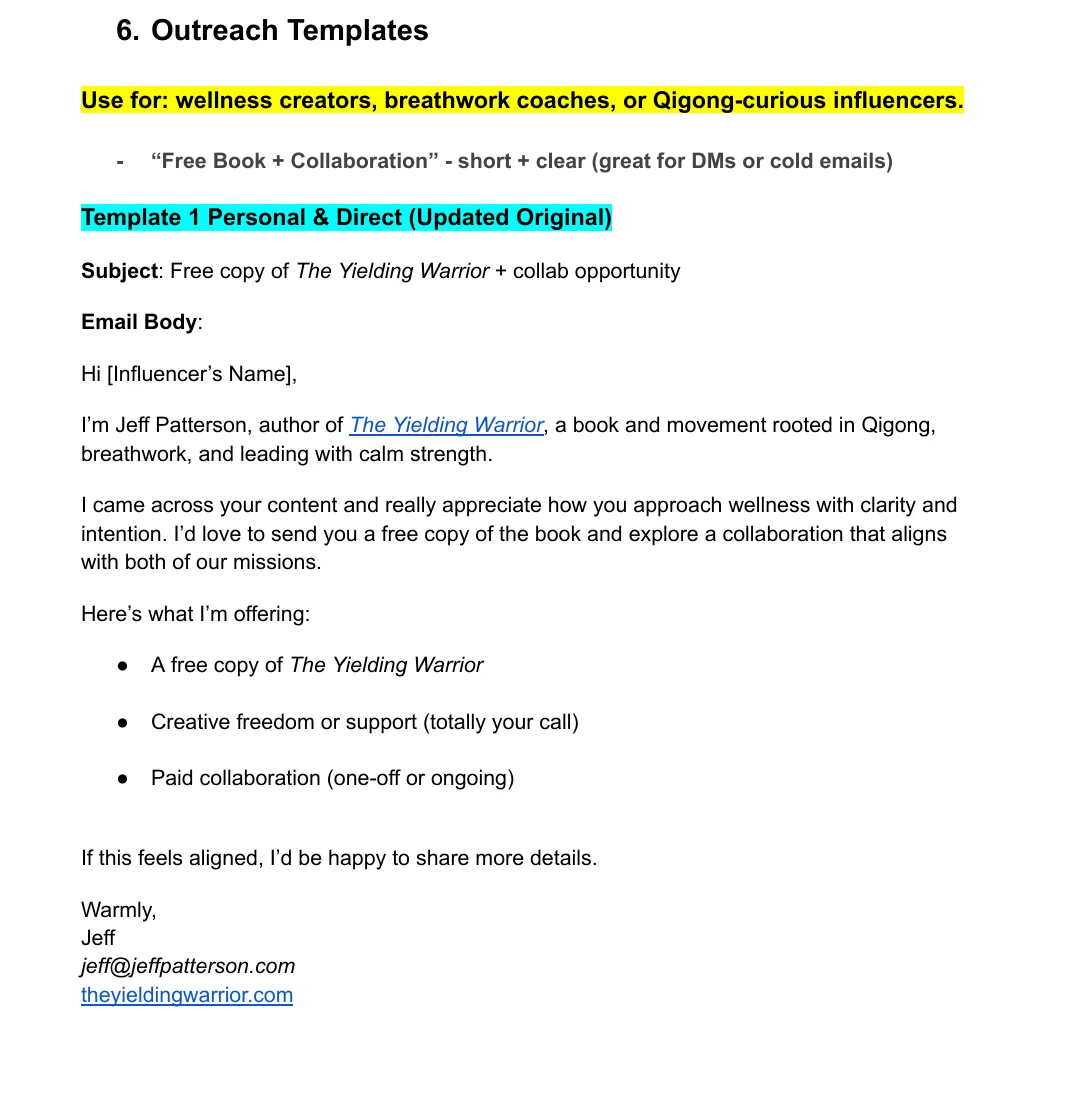
Use email for formal invites and DMs from his own account for wellness and spiritual creators.
It builds trust and lifts reply rates with people who prefer direct contact.
Micro and mid-tier creators with at least 1.5% engagement.
Fit and engagement matter more than follower count.
How it would run
25 creators sourced a week
5 niches mapped
6 outreach templates
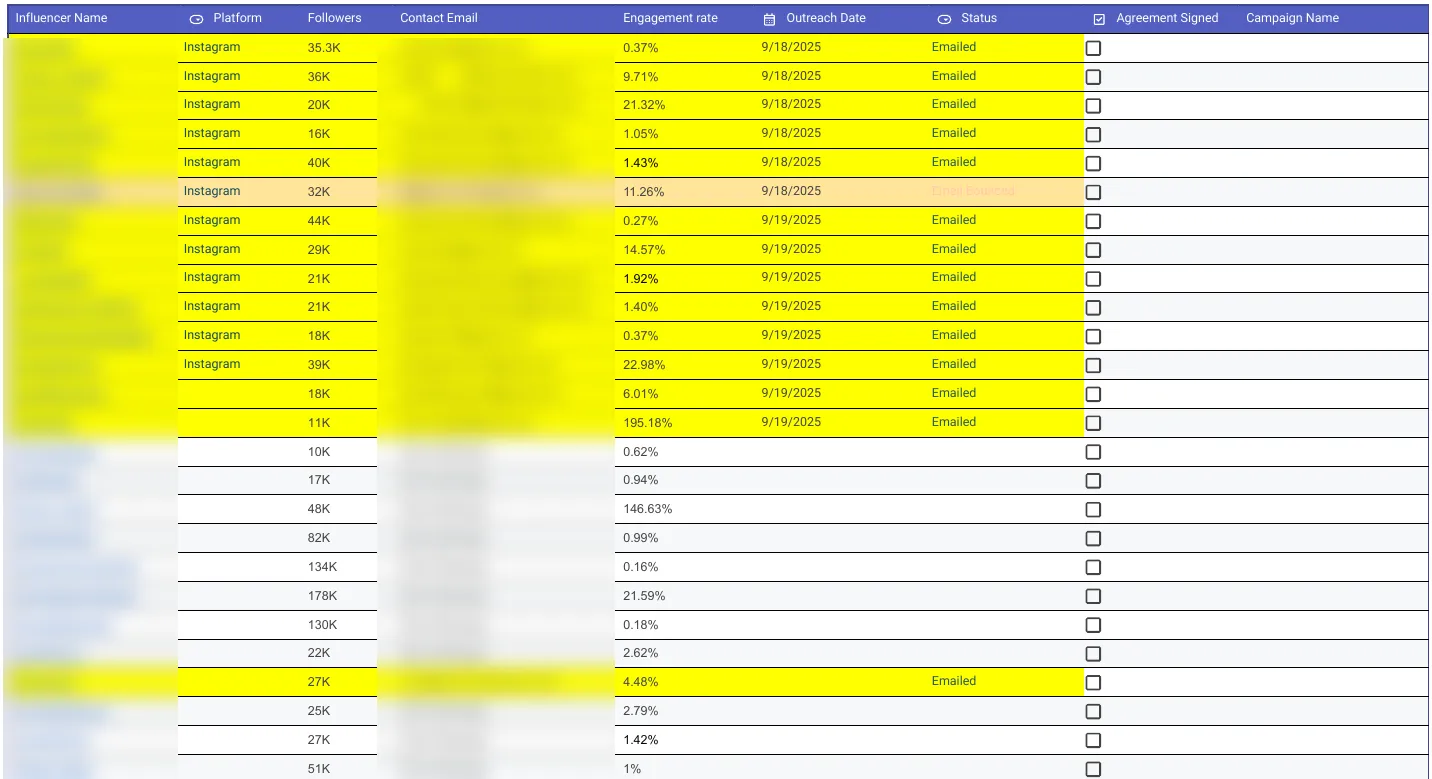
4 tracker stages to a signed partner
What I recommended
Offer bundles by audience, like a Peak Performance Pack for athletes and an Energy Reset Series for busy founders. Give long-term partners access to premium courses. Track every link and code from day one, so the next round of offers follows the data. Ideas from the plan
Subject line Let's co-create something powerful
Athlete angle Mind-body training with the author's new book
Performance Pack The book, the membership and a personal affiliate code
From the document
The messaging framework and creator criteria
One of the six outreach templates, written in his voice
The outreach tracker from week one (creator names and emails blurred)
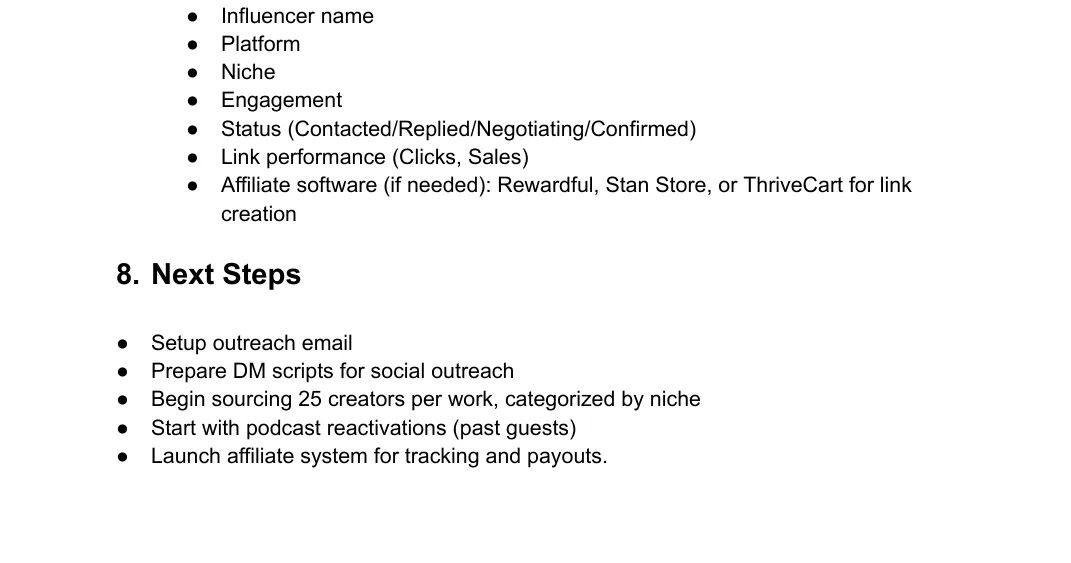
Tracking setup and next steps File 05 of 05 Next file: A managed IT firm in Kansas City →